


Genetic Testing for Familial Hyperinsulinism (FHI), ABCC8-Related


Familial hyperinsulinism causes a baby's pancreas to release too much insulin, which can lead to dangerously low blood sugar. For people of Ashkenazi Jewish descent, the odds of carrying the ABCC8 gene change behind this inherited condition are higher than in the general population. Carriers have no symptoms themselves, so many families don't learn they're at risk until they have an affected child. A carrier screen for familial hyperinsulinism, ABCC8-related, checks for this gene change so you can understand your risk before you're expecting or planning a pregnancy.
What Is Familial Hyperinsulinism?
Familial hyperinsulinism happens when the pancreas releases too much insulin, the hormone that pulls sugar out of the bloodstream and into the body's cells. With too much insulin circulating, blood sugar drops far lower than it should, and a newborn doesn't get the steady fuel supply their body needs to survive.1,2
In newborns, the signs of FHI can be easy to miss and can include: poor feeding, low muscle tone, breathing pauses, or seizures brought on by a sudden drop in blood sugar. Some children aren't diagnosed until later in infancy or childhood.1
Treatment usually starts with diazoxide, currently the only medicine approved specifically for FHI, along with a careful feeding schedule to help keep blood sugar steady.1 For the smaller number of children whose blood sugar can't be controlled with medication alone, surgery to remove part of the pancreas may be considered.1 For children who can be managed medically, glucose control usually gets easier over time, and many enter clinical remission after months or years of treatment.1
ABCC8
ABCC8 is a gene that gives instructions for building part of a channel in the pancreas that helps control when insulin is released.2 When a change in the ABCC8 gene stops the channel from working as it should, the pancreas releases insulin even when the body doesn’t need it, causing low blood sugar.1,2
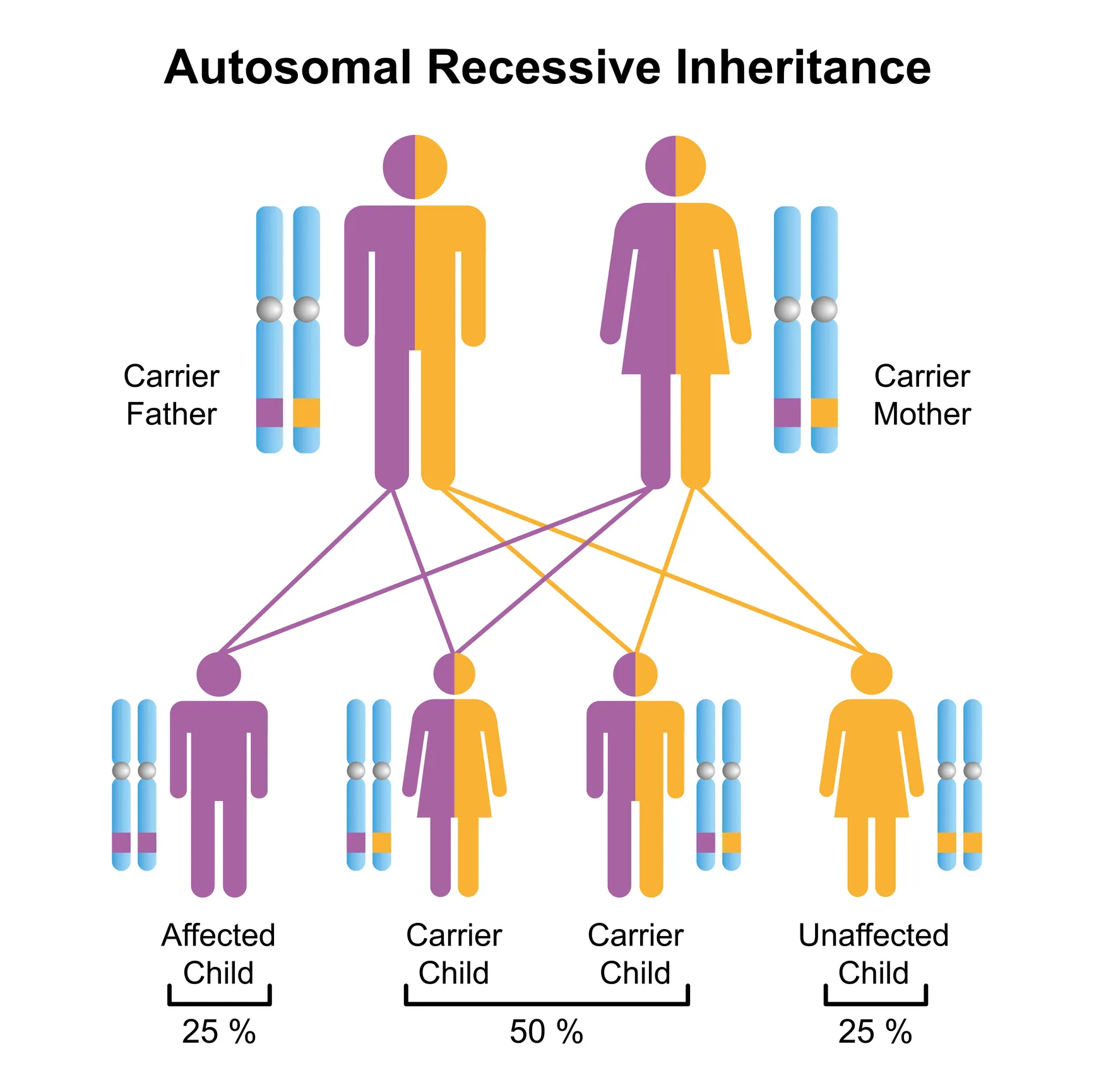
If both parents are carriers, each pregnancy has:1,3
- A 25% chance the child inherits a nonworking copy from each parent and is affected
- A 50% chance the child is an unaffected carrier, like the parents
- A 25% chance the child inherits two working copies and is unaffected
The classic inheritance pattern, called autosomal recessive inheritance, happens when a child inherits one nonworking copy of ABCC8 from each parent. A carrier has one working copy and one nonworking copy, and carriers have no symptoms at all because the one working copy is enough.1,3
There's an important exception worth knowing about. Even when only the father carries a change in ABCC8 and the mother isn't a carrier, a child can occasionally still develop a form of the condition called focal hyperinsulinism. This happens when a separate, non-inherited change occurs in a small patch of pancreas cells early in development, on top of the copy already inherited from the father. This second event is random, so the overall chance is low, about 1 in 540 for the child of a father who carries a change in ABCC8. Still, it's real enough that the father's carrier status matters on its own.1
Why Carrier Screening Matters
Carriers show no signs of the condition, and family history alone can't always predict which children will be affected, especially with the focal form. Since there's no way to tell who carries a change in ABCC8 just by looking at a family tree, carrier screening is the most reliable way to understand your risk before a pregnancy begins, rather than after a child is already affected.
.webp)
Your Odds of Carrying the ABCC8 Gene Change
Familial hyperinsulinism is one of several conditions linked to Ashkenazi Jewish ancestry, and the numbers are meaningful. A specific change in ABCC8, known as c.3989-9G>A, is estimated to affect about 1 in 83 people of Ashkenazi Jewish descent.1 Familial hyperinsulinism is much rarer in the general population, affecting an estimated 1 in 50,000 births overall, which is part of why ancestry-based screening carries so much weight.5
Who Should Consider Screening
Ashkenazi Jewish Ancestry
A specific ABCC8 change is estimated to affect about 1 in 83 people of Ashkenazi Jewish descent, a carrier rate high enough on its own to make screening worth prioritizing.
A Father Who Carries the ABCC8 Gene Change
Focal hyperinsulinism can develop even when only the father passes down a change in ABCC8 and the mother isn't a carrier at all, so a father's carrier status matters on its own.
Planning a Pregnancy
Screening before you conceive means you'll have your carrier results in hand while you still have the most options.
A Partner Who Has Already Screened Positive
If your partner is a known carrier for FHI, screening tells you whether your child's risk comes from the classic inherited form, the rarer focal form, or neither.
Using a Sperm or Egg Donor
A donor's genetic background carries the same considerations a partner's would, so screening applies just the same.
Familial Hyperinsulinism in Your Immediate Family
A family history of the condition, including a relative with unexplained, severe low blood sugar as a newborn, raises the chance that a change in ABCC8 is already running in the family.
How Screening for Familial Hyperinsulinism Works

Order Your Kit
Register online and receive a saliva collection kit shipped directly to your home within a few days.

Collect Your Sample
Provide a simple saliva sample at home, following the easy step by step instructions included in your kit.

Lab Analysis
Your sample is analyzed at a CLIA-accredited laboratory using advanced sequencing technology.

Receive Results
Receive your results within 3 to 4 weeks. You can then schedule a complimentary consultation with a certified genetic counselor to review your findings.
Costs & Insurance Coverage
Use Insurance Coverage
Self-Pay Option
Understanding Your Results
Positive (Carrier)

A positive result means you carry one working copy and one nonworking copy of ABCC8.1,3 You are not affected by familial hyperinsulinism and never will be, but you can pass the nonworking copy to a child. If you're planning a pregnancy, this is the point where your partner should also be screened, since your child's risk depends on whether your partner carries a change in the same gene.
Negative Result

A negative result means you have a significantly lower chance of being a carrier for familial hyperinsulinism. It lowers your risk significantly without bringing it all the way to zero.
If You and Your Partner Are Both Carriers
If both partners carry a change in ABCC8, each pregnancy has a 25% chance of being affected by familial hyperinsulinism.1,3 If you are already pregnant, diagnostic tests such as chorionic villus sampling or amniocentesis can determine whether a current pregnancy is affected, giving you an answer before birth.4 Genetic counseling is strongly recommended, and every jscreen result comes with access to a board certified genetic counselor to walk through what your specific results mean.
Know Your Risk Before You're Expecting
Frequently Asked Questions
Can You Test for Familial Hyperinsulinism?
Yes. A familial hyperinsulinism test can be done before or during pregnancy. Carrier screening checks whether you or your partner carry a change in ABCC8, the gene behind this specific form of familial hyperinsulinism, and diagnostic testing during a current pregnancy can determine whether a fetus is affected.
What Does an ABCC8-Related Hyperinsulinism Test Show?
Results generally fall into two categories. A negative result means you're unlikely to be a carrier, though it can't rule out every possible change. A positive result means you carry one working copy and one nonworking copy of ABCC8, with no health effects to you personally, however you are at risk of having a child with FH if your partner is also a carrier.
Is There a Familial Hyperinsulinism Prenatal Test?
If you're already pregnant and both partners are found to be carriers, diagnostic testing such as chorionic villus sampling or amniocentesis can determine whether the pregnancy is affected, rather than waiting until birth.4
How Do You Test for Familial Hyperinsulinism From Home?
A familial hyperinsulinism DNA test through jscreen happens entirely from home. You order a kit online, provide a saliva sample using the instructions included, and mail it back using the prepaid materials in the kit. Your sample is analyzed at a CLIA-accredited laboratory, and results are typically available within 3 to 4 weeks.
Why Is Familial Hyperinsulinism More Common Among Ashkenazi Jewish People?
A specific change in ABCC8 became more common in this population generations ago, which is why about 1 in 83 people with Ashkenazi Jewish ancestry carry it today, compared to a much lower rate in the general population.1
What Happens if Only the Father Carries the ABCC8 Gene Change?
Even if the mother isn't a carrier at all, a child can occasionally still develop focal hyperinsulinism if the father carries a change in ABCC8. This form isn't inherited from both parents; it happens when a separate, random change occurs in a small patch of pancreas cells during early development, on top of the copy already inherited from the father. The overall risk is low, about 1 in 540 for the child of a carrier father, but it's a reason genetic counselors consider a father's carrier status meaningful on its own.1
Do I Need Genetic Counseling After My Results?
Genetic counseling is strongly recommended for everyone, regardless of results. Every screen through jscreen includes access to a complimentary consultation with a board certified genetic counselor, who can explain what your specific results mean and what your options are going forward.
What Happens if My Partner and I Are Both Carriers?
Each pregnancy would have a 25% chance of being affected by familial hyperinsulinism.1,3 We recommend speaking with a genetic counselor to talk through your options, which can include diagnostic testing during a current pregnancy or other family planning approaches if you haven't conceived yet.4
References
- Gillis D. Nonsyndromic Genetic Hyperinsulinism Overview. GeneReviews. University of Washington, Seattle. Initial posting August 19, 2003. Updated October 31, 2024. Accessed September 11, 2026. https://www.ncbi.nlm.nih.gov/books/NBK1375/
- ABCC8 Gene. MedlinePlus Genetics. National Library of Medicine. Last updated January 13, 2026. Accessed September 11, 2026.
https://medlineplus.gov/genetics/gene/abcc8/ - ABCC8-Related Conditions. Norton & Elaine Sarnoff Center for Jewish Genetics. Last updated October 9, 2023. Accessed September 11, 2026. https://www.jewishgenetics.org/genetic-disorders/search-genetic-disorders/abcc8-related-conditions/
- Chorionic Villus Sampling (CVS). Cleveland Clinic. Last reviewed August 8, 2024. Accessed September 11, 2026. https://my.clevelandclinic.org/health/diagnostics/4028-chorionic-villus-sampling-for-prenatal-diagnosis
- Congenital Hyperinsulinism (HI) Panel Testing Information. Genetic Diagnostic Laboratory, Department of Genetics, University of Pennsylvania School of Medicine. June 26, 2025. Accessed September 11, 2026. https://genetics.med.upenn.edu/assets/user-content/documents/hi-panel-with-hk1-info-sheet-2025.pdf